EN
EN


- Overview
- Recommended Products
Overview
1. Overview
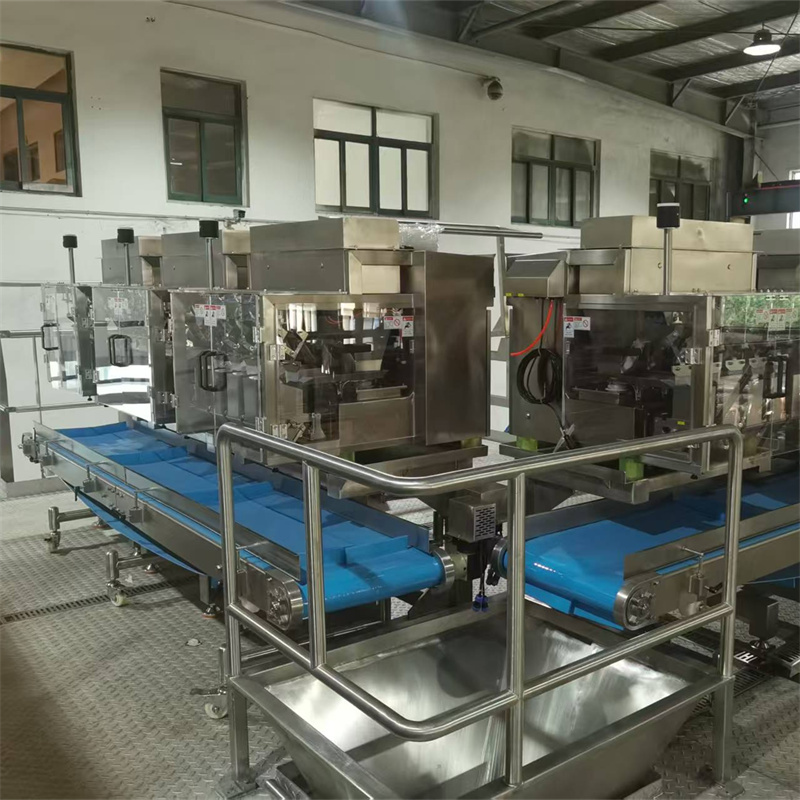
A linear scale is a food-grade automatic weighing machine characterised by multiple weighing units arranged in a straight line that dose ingredients one by one according to a recipe. In the Globule mixing and packaging system it serves as the true "measuring centre" of the whole line. In the entire system it has a single mission, yet that mission decides the success of everything downstream: taking multiple raw materials that differ in shape, bulk density and particle size, and combining them — stably, quickly and traceably — into every single portion of "mixed product" according to the percentages defined in the customer's recipe. Whether it is a mixed-nut recipe demanding roughly 30% cashews, 20% almonds, 20% walnuts, 15% dried cranberries and 15% raisins, or a wide-ratio blend of multi-grain cereal with dried fruit, the linear scale weighs by mass instead of by volume, fundamentally eliminating the proportion drift that density differences cause.
2. Position and Value in the Mixing & Packaging System
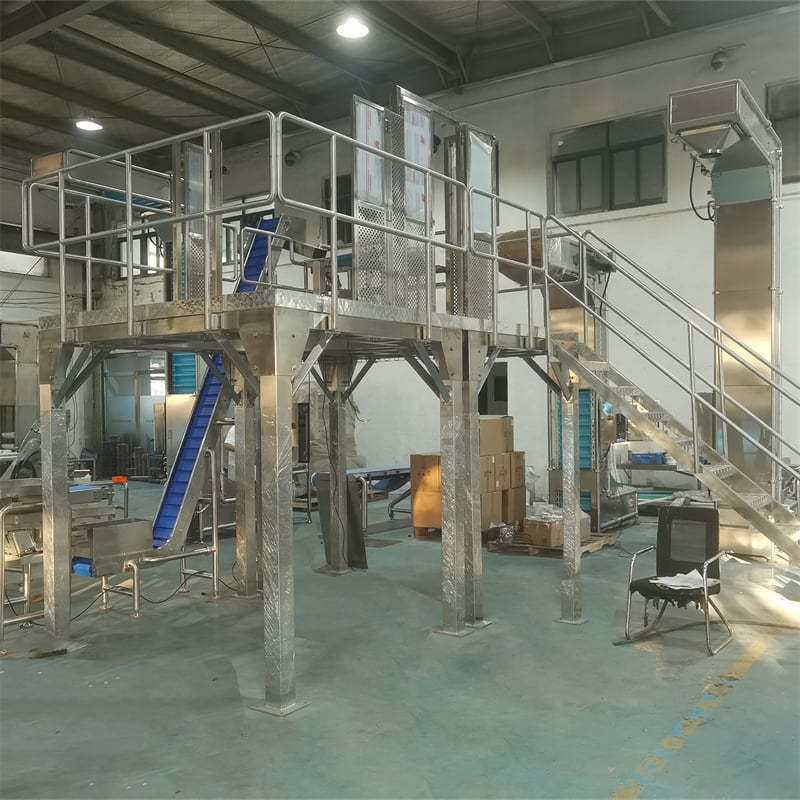
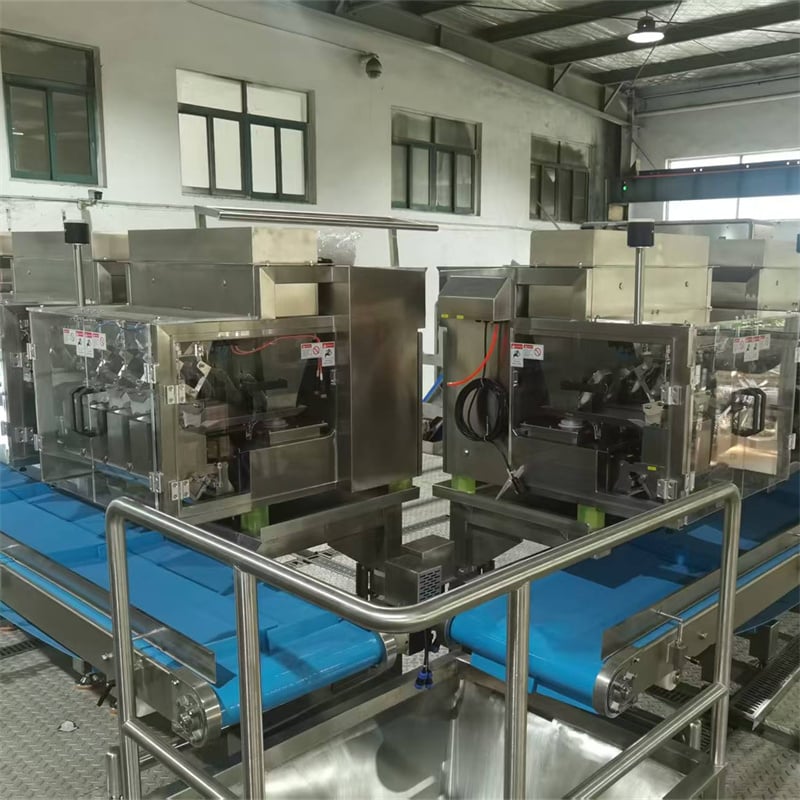
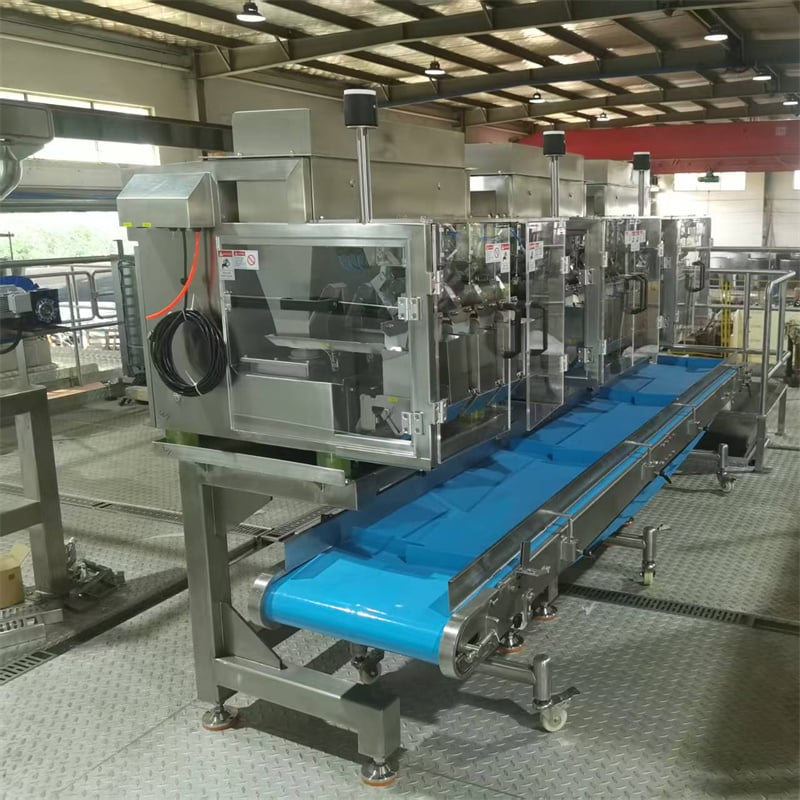
The process flow of the mixing and packaging system is: multi-ingredient loading → proportioning and weighing (linear scale) → collection and mixing → inclined conveying → packaging. The linear scale sits at the very head of the line, so the quality of its output is passed directly to every bag produced downstream. If proportioning is inaccurate, no amount of sophistication in later mixing, conveying or bagging can repair the damage; the result shows up as inconsistent composition from bag to bag and flavour fluctuation between batches. For this reason Globule treats the linear scale as the unit with the strictest accuracy requirements in the system, and pairs it with the stainless platform (stable support plus an operator observation walkway) and the protective frame (ingredient isolation against cross-contamination). Together the three form the "golden triangle" of the mixing work cell.
3. Structure and Working Principle
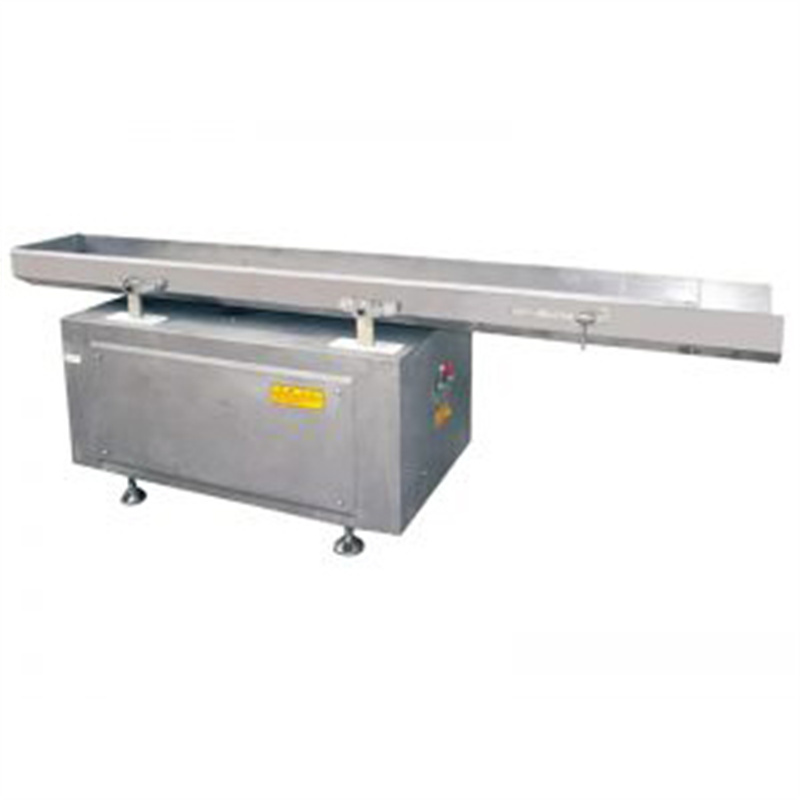
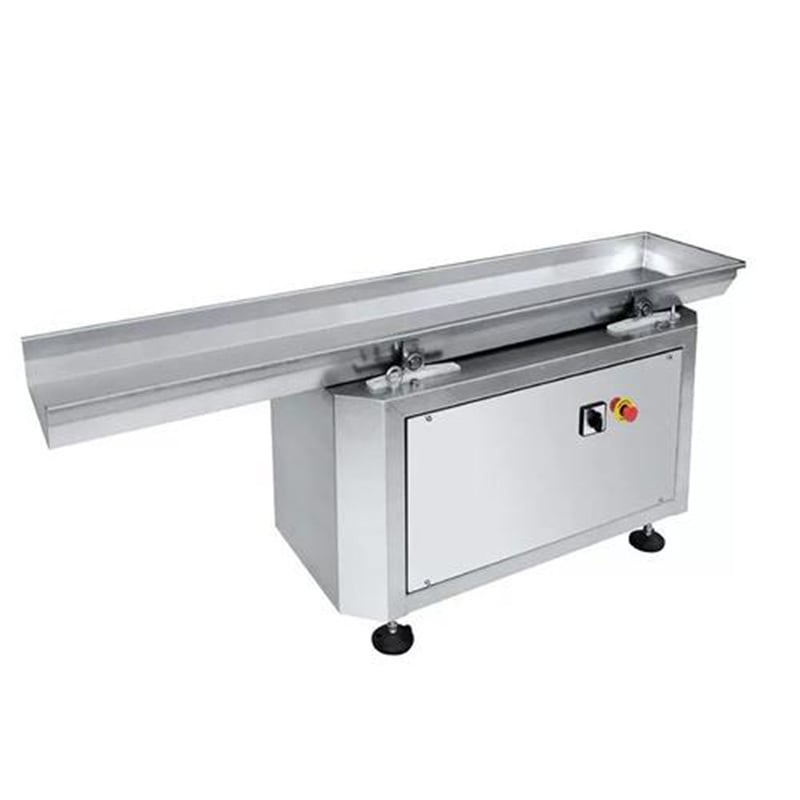
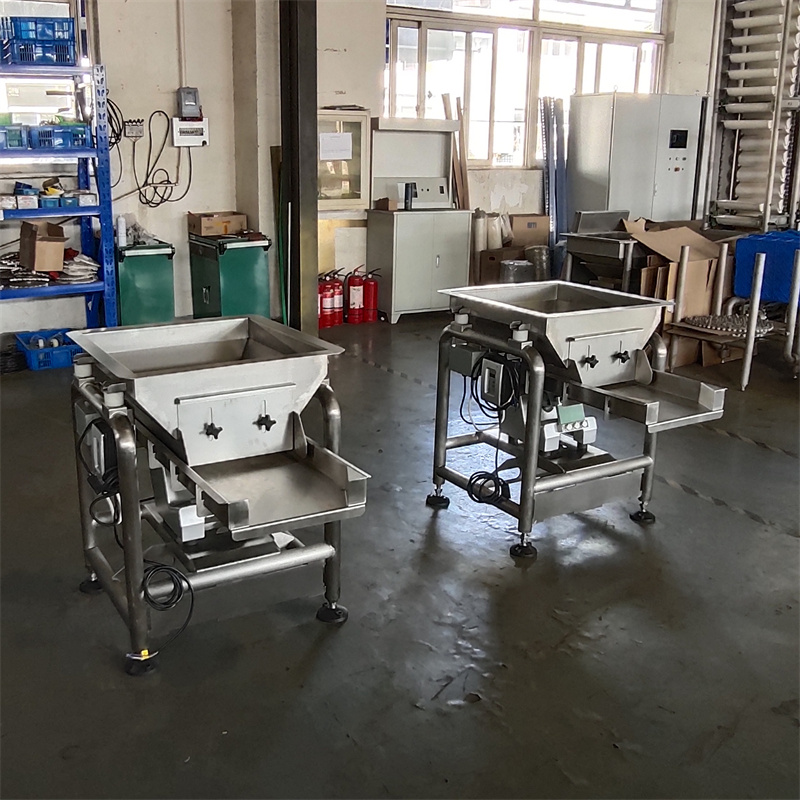
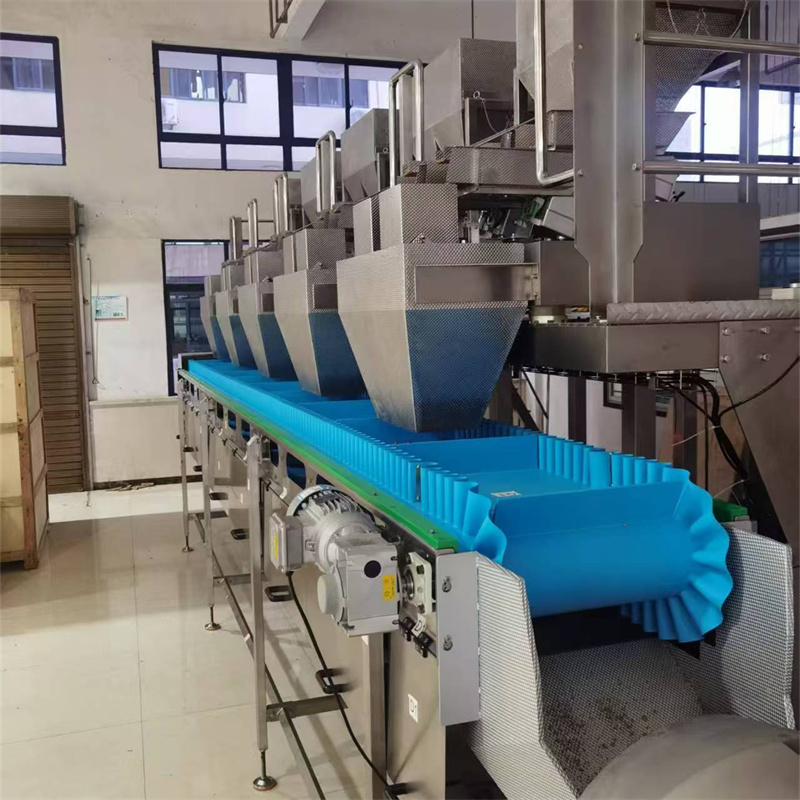
Globule linear scales use a modular architecture in which each ingredient occupies its own independent weighing channel, with channels arranged side by side in a line so they never interfere with one another. Every channel consists of a vibratory feeder, a weighing hopper, load cells, a discharge gate and its control unit. Operation follows a "coarse feed plus fine feed" two-speed strategy: a fast vibration phase delivers most of the target weight; as the setpoint approaches, the system automatically switches to slow, incremental dosing that converges to the target at gram-level resolution; the discharge gate then opens and the portion drops onto the collecting conveyor below. All channels are supervised by one PLC that manages recipes, target weights, compensation factors and per-channel weight records.
4. Key Features
Weighing by mass instead of volume
● : because ingredients differ greatly in bulk density — nuts can be several times denser than dried fruit — volumetric dosing inevitably drifts; the linear scale uses weight as the only basis, keeping the mix ratio stable over time.
Independent parallel channels
● : each ingredient has its own dedicated channel, eliminating cross-mixing between ingredients and mutual interference; the number of channels follows the recipe, typically 4, 6 or 8, and is expandable.
Two-speed fine feeding
● : coarse feed protects throughput while fine feed protects accuracy, balancing productivity with proportion consistency.
One-touch recipe changeover
● : the touchscreen stores multiple recipes, so switching between product lines requires no mechanical adjustment — ideal for small-batch, multi-recipe production of multiple flavours.
Full traceability
● : per-channel records of batch weights and deviations, combined with rejection and reporting functions at the packaging end, give every bag a "proportion file".
Intelligent line interlocking
● : the scale automatically pauses feeding when it receives blockage or starvation signals from downstream equipment, preventing pile-ups and wasted weighing cycles.
5. Hygiene and Food-Safety Design
As a machine that directly contacts food, the linear scale is engineered to FSMA hygienic design principles. All product-contact parts are food-grade stainless steel (grade 304 as standard, 316 optional) with polished surfaces that reduce product adhesion; hoppers use rounded corners and full-penetration welding to eliminate harbourage points; hoppers, feeder troughs and discharge gates are tool-free quick-release for fast end-of-shift cleaning and full inspection; electrical components and load cells use high ingress-protection ratings that withstand washdown environments; and the machine contains no wooden parts and no peeling paint, excluding foreign-object contamination at the source.
6. Line Synergy
The linear scale never works alone. It is mounted on the Globule stainless platform so that the elevated structure creates a gravity-flow design where "weighing is discharging". Its results feed back to guide the inclined conveyor and the packaging machine to run in rhythm. When the protective frame detects an open door or a person entering a danger zone, the scale interlocks and stops simultaneously to guarantee safety. This deep integration lets the whole mixing line run as if it were a single machine.
7. Target Products and Applications
● Mixed nuts (several nut types blended to a recipe)
● Mixed dried fruit (different dried fruits combined in set ratios)
● Multi-flavour snack mix pouches
● Multi-grain cereal and similar products that need accurate proportioning of many ingredients
● Recipe foods under strict allergen control that demand physical ingredient separation
Typical scenario: a customer needs a snack mix bag that always contains 20 g of cashews (±0.5 g), 15 g of almonds and 10 g of dried cranberries. The channels of the linear scale weigh in parallel to the set values, the downstream sections merge the portions automatically, and the line produces dozens of consistent bags every minute.
8. Reference Technical Parameters (configurable per project)
| Item | Reference value |
| Number of weighing channels | Per recipe ingredients (typically 4 / 6 / 8) |
| Target weight per cycle | Per single-bag recipe (typically 10–1000 g) |
| Feeding method | Vibratory coarse feed plus fine two-speed dosing |
| Load cells | Stainless steel, high IP rating (IP65/IP67 optional) |
| Control | PLC + touchscreen, multi-recipe storage and one-touch recall |
| Contact material | Food-grade stainless steel 304 (316 optional) |
| Mounting | Integrated on the stainless platform with gravity discharge |
9. About Globule
Globule Sanitary Conveyor Pty Ltd (Shanghai Lingan Equipment Manufacturing Co., Ltd.) was founded in 2019. Its core engineering team has more than 10 years of experience in food conveying and packaging equipment, and it upholds the design philosophy of "Hygiene First · Safety First". Our products follow FSMA hygienic design guidelines and deliver integrated solutions from mixing and proportioning through conveying to packaging.
10. Selection and Service
Globule offers end-to-end service covering material testing, recipe-based weighing design, whole-line layout and installation commissioning. Send us your recipes and capacity requirements, and we will engineer the best linear scale configuration for you.